Galvanized Steel Pipe: How to Tell What You Have, and What Repiping Involves
If your house was built in the 1950s or 60s, there's a real chance the pipes in your walls are past the point where patching them still makes sense.
September 17, 2026 · 4 min read
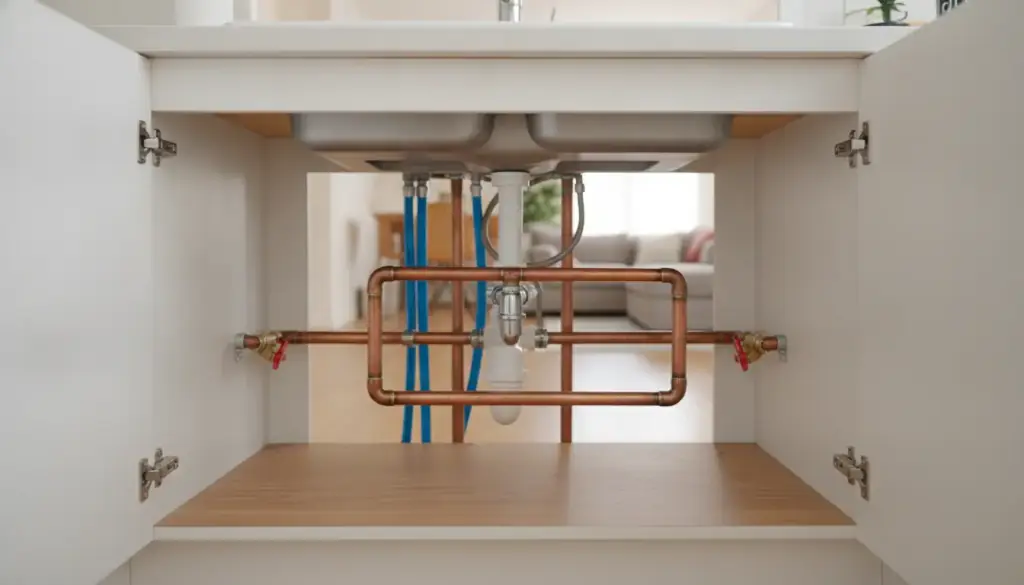
If your house was built in the 1950s or 60s, which describes a good share of the older homes around Baytown, there's a real chance the supply lines running through your walls are galvanized steel instead of copper or PEX. It was the standard material at the time. It also has a hard limit built into it, and most houses that still have it are somewhere past that limit right now.
How to tell what you actually have
The easiest check doesn't need any tools. Find an exposed section of pipe, usually in the attic, under a sink, or where the line comes up from the slab, and look at the color. Galvanized steel has a dull gray, slightly silver finish, and a magnet will stick to it. Copper is reddish-brown and a magnet won't touch it. PEX is a flexible plastic tube, usually white, red, or blue, and obviously isn't metal at all.
- A magnet sticks to the pipe wherever you can reach it
- Water pressure has dropped noticeably over the years, especially upstairs or at the far end of the house
- Hot water runs rust colored or slightly orange for the first few seconds after you turn on a tap that hasn't been used in a while
- You've had more than one pinhole leak turn up in different parts of the house over the past few years
Any single one of those isn't proof by itself. All four together on a house from that era is close to a certainty.
Why it fails from the inside, not the outside
Galvanized pipe is steel with a zinc coating meant to slow down corrosion. That coating wears away from the inside, where you can't see it, as water runs through the pipe for decades. Once the zinc is gone, the bare steel underneath starts to rust, and the rust builds up inside the pipe much the way plaque builds up in an artery. The pipe doesn't get thinner from rust so much as it gets narrower, which is why pressure loss is usually the first symptom homeowners notice, well before an actual leak shows up.
The failure point after that is a pinhole, not a burst pipe, in most cases. Rust eats through a weak spot in the wall of the pipe and water starts weeping out, often inside a wall or under a slab where you won't see it until there's a stain, a soft spot in drywall, or a water bill that doesn't make sense.
What repiping actually involves
A full repipe replaces every galvanized supply line in the house with new pipe, run to every fixture, usually in a single multi-day job rather than fixture by fixture as leaks turn up. We use Uponor PEX, which is flexible enough to run through existing wall and ceiling cavities with far fewer cuts than a rigid pipe would need, and it doesn't corrode from the inside the way steel does.
The job itself means opening a limited number of access points in walls and ceilings to route the new lines, connecting each fixture, pressure testing the whole system, and patching everything back up. It's disruptive for a few days, especially around water use in the house, but it's a one-time job rather than something you revisit every time another pinhole shows up somewhere new.
What you get once it's done
New PEX repiping through us carries a 25-year manufacturer's warranty from Uponor on the pipe itself, plus a 2-year guarantee on our own labor. That's a different conversation than patching one leak at a time in a system that's going to keep failing somewhere else next year, and it's one homeowner we worked with told us was several hundred dollars less than the other quote she got, on top of being the local option.
What a repipe day actually feels like
Water gets shut off for stretches at a time while we work, and depending on the size of the house it usually runs a couple of days rather than one. We plan the access points to be as unobtrusive as possible, working through closets, attic space, and existing cavities wherever we can instead of opening up finished walls at random. By the end, every fixture in the house is running through new PEX, and the old galvanized lines are gone for good rather than left behind a wall waiting to leak again somewhere new.
If you're not sure yet
If you've had more than one leak in the past couple of years, or your water pressure just isn't what it used to be, it's worth having someone actually look at what's in your walls before you spend more money chasing leaks one at a time. Call 832-597-4365 and we'll walk through it with you.
Choice Plumbers, LLC, 832-597-4365
Call 832-597-4365More articles
Why Sewer Lines Fail Faster in Baytown's Clay Soil
The ground under Baytown moves more than most homeowners realize, and older sewer lines were never built to move with it.
What a Sewer Camera Inspection Actually Shows You
Five different problems can cause the exact same slow drain. A camera is the only honest way to tell them apart before you pay to fix the wrong one.