Why Sewer Lines Fail Faster in Baytown's Clay Soil
The ground under Baytown moves more than most homeowners realize, and older sewer lines were never built to move with it.
September 17, 2026 · 3 min read
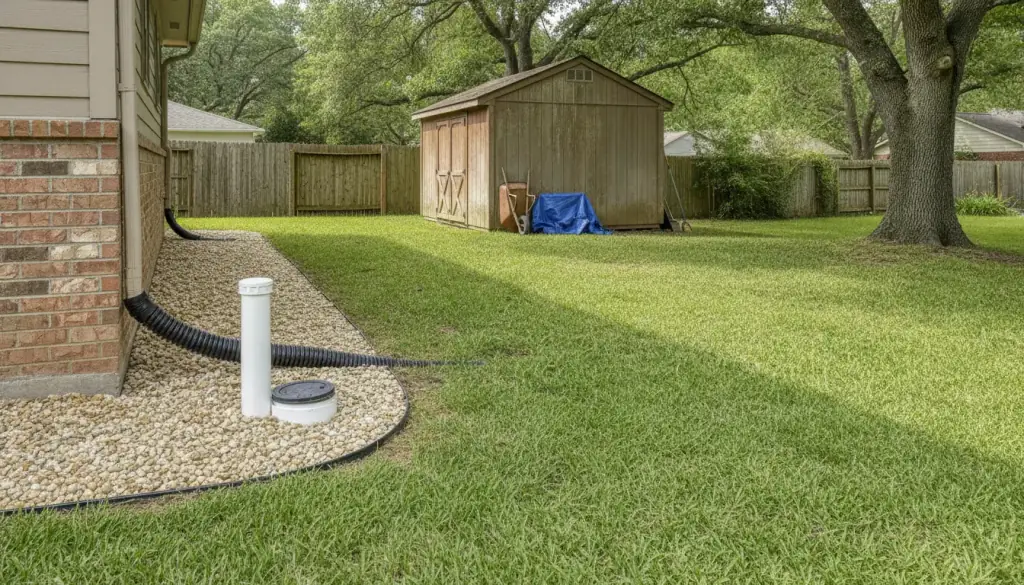
Most of the sewer lines we end up replacing in Baytown weren't put in badly. What gets them is what's around them. This part of the Texas Gulf Coast sits on heavy clay soil, the kind a lot of people around here just call gumbo, and it does not sit still. It swells when it soaks up water after a hard rain, and it shrinks and cracks when a dry August bakes it out. A rigid pipe buried in soil that keeps moving like that is carrying stress no engineer ever designed it to take.
The ground here doesn't hold still
Baytown's rain pattern makes this worse than it would be somewhere drier and steadier. We go from tropical downpours that saturate the yard for days to weeks of no rain at all, sometimes in the same month. Every one of those swings moves the soil around a buried pipe a little. Cast iron and clay tile, the two materials you'll find under most houses built before the 1980s in this area, are strong under steady weight and brittle under repeated movement. A joint that's been shifted and settled a hundred times over forty years is not the same joint that went into the ground.
PVC handles that movement better, which is one reason it's what we install today. But a lot of Baytown houses still have the original clay or cast iron line running from the house to the street, and those lines are now old enough that the soil has had decades to work on them.
What shows up before the line actually fails
A sewer line almost never fails all at once. It gives you warnings for months, sometimes years, before it actually collapses or backs up completely. The trouble is the warnings look small enough that it's easy to explain them away.
- More than one drain in the house running slow at the same time, not just the one sink you've been meaning to deal with
- A gurgle from the toilet when the washing machine drains, which usually means air is getting trapped somewhere it shouldn't be
- A patch of yard along the line's path that stays soggy or unusually green days after everything else has dried out
- A sewer smell outside after rain that wasn't there before
Any one of those on its own might be nothing. Two or three together, especially after the soil has been through a wet spell, usually means the pipe is starting to separate at a joint or a root has found a hairline crack and is working its way in.
Why guessing costs more than looking
The instinct when a drain runs slow is to snake it and move on, and sometimes that's genuinely all it needs. But if the real problem is a shifted or cracked line under the yard, snaking clears the immediate clog and leaves the actual damage exactly where it was. It comes back, usually worse, and by the time it backs up into the house the pipe has often gone from cracked to partially collapsed. That's the difference between a straightforward repair and a full-day dig.
We run a camera down the line before we tell a homeowner what they're actually looking at, because guessing in either direction wastes their money. Guessing it's fine when it isn't means a bigger failure later. Guessing it needs full replacement when it's actually one bad joint means paying for work that wasn't necessary.
What a real replacement looks like
When a line has genuinely failed, the fix depends on where the damage is and how much of the run is affected. A localized break can sometimes be repaired without digging up the whole yard. A line that's collapsed under the house, which happens more than people expect on older Baytown homes, means tunneling under the slab instead of tearing up the floor. For lines that are structurally sound but full of roots or scale, hydro-jetting can clear and restore flow without any digging at all. We've walked homeowners through full sewer replacements on houses from the 1950s and 60s, including a main line under a house built in 1960 that had simply reached the end of what decades of clay soil movement leaves an old cast iron pipe able to do.
If it's your line
If your drains have been acting up for a few weeks, or you've had a soggy patch in the yard that won't dry out, it's worth getting a camera down there before it turns into an emergency. Call us at 832-597-4365 and we'll take a look.
Choice Plumbers, LLC, 832-597-4365
Call 832-597-4365More articles
Galvanized Steel Pipe: How to Tell What You Have, and What Repiping Involves
If your house was built in the 1950s or 60s, there's a real chance the pipes in your walls are past the point where patching them still makes sense.
What a Sewer Camera Inspection Actually Shows You
Five different problems can cause the exact same slow drain. A camera is the only honest way to tell them apart before you pay to fix the wrong one.