Tank or Tankless: An Honest Look for a Gulf Coast House
The right water heater depends on how your household actually uses hot water, not on which option sounds more modern.
September 17, 2026 · 3 min read
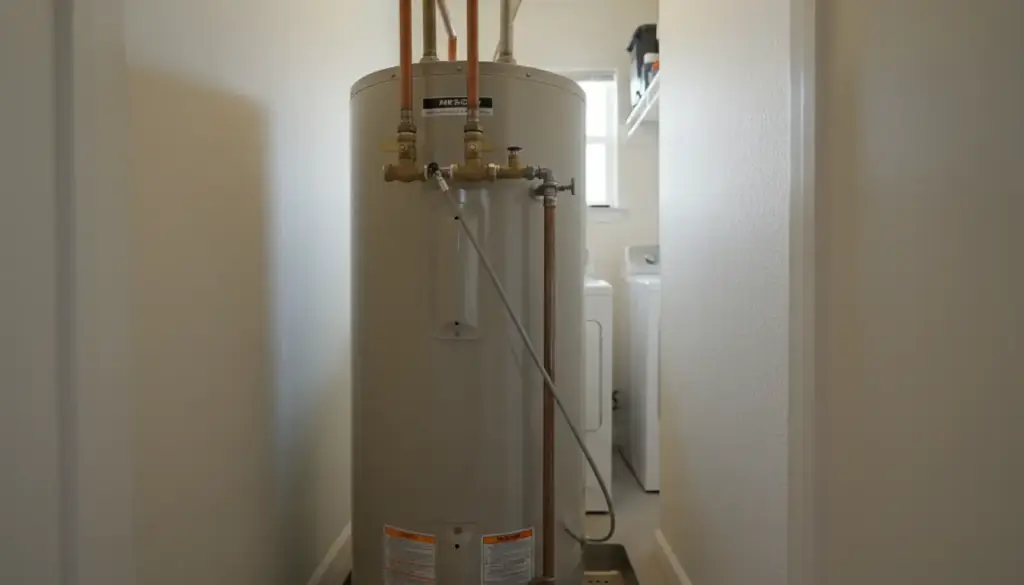
We get asked which is better, tank or tankless, more than almost anything else on a water heater call, and the honest answer is that it depends on the house, not on which one sounds more modern. Both are good equipment. They solve the hot water problem in different ways, and one of those ways fits some houses better than the other.
What's actually different
A standard tank water heater keeps 40 to 50 gallons of water hot and ready around the clock, so it's using energy to maintain that temperature even when nobody's home. A tankless unit heats water on demand as it passes through, so it isn't holding a standing reserve and isn't spending energy keeping water hot that nobody's using yet.
That difference shows up in two places: your utility bill and how much hot water you can use at once. Tankless generally costs less to run month to month because it isn't maintaining a tank of hot water around the clock. A tank can run out mid-shower if enough hot water gets used back to back, where a tankless unit keeps producing hot water as long as it's running, limited by its flow rate rather than a fixed supply.
Where tankless genuinely wins
If your household runs the dishwasher, does laundry, and showers back to back most mornings, running out of hot water is a real daily frustration, and tankless solves that completely because there's no tank to drain in the first place. It also takes up a fraction of the space a tank does, which matters in a smaller utility closet, and it tends to last longer before it needs replacing.
Where a tank still makes more sense
Tankless costs more upfront, both for the unit and often for the installation, since it can need different gas line sizing or electrical service depending on the model. If your household is simple, one or two people, staggered showers, no real simultaneous demand problem, a tank does the job for less money and a simpler install. A tank is also the more forgiving option if your home's gas or electrical setup isn't already sized for a tankless unit's higher instantaneous demand.
Gas or electric changes the math
We install both standard and tankless units in gas and electric versions. Gas units, tank or tankless, generally heat faster and cost less to run than electric where gas service is already at the house. Electric is the simpler retrofit where there's no gas line to work with, and it's a perfectly reliable choice, it just tends to run a bit slower to recover after heavy use in tank form.
Maintenance and how long each one actually lasts
A tank water heater typically lasts 8 to 12 years around here, and hard water shortens that if the tank never gets flushed. Sediment settles at the bottom of the tank over time, and it makes the burner or element work harder to heat the same amount of water, which shortens the unit's life and raises your bill along the way. A tankless unit generally runs longer, often into the 15 to 20 year range, but it needs its own maintenance, mainly a periodic flush to clear mineral scale out of the heat exchanger, since Gulf Coast water is hard enough that skipping that step will catch up with the unit eventually.
Neither one is maintenance-free, and neither one is high-maintenance either. The difference is mostly what kind of attention it needs and how forgiving it is if that attention gets skipped for a year or two.
What's covered either way
Every new water heater we install, tank or tankless, gas or electric, comes with a 6-year manufacturer's warranty and a 1-year guarantee on our own labor. That's true no matter which one actually fits your house better, and we also test your line pressure with an electronic gauge as part of the install, since a heater that's fine on its own can still get shortened by pressure that's too high for it.
If you're not sure which one fits your house
The honest version of this answer usually needs five minutes looking at your existing gas line or electrical panel and asking how your household actually uses hot water, not a sales pitch for whichever one costs more. Call 832-597-4365 and we'll figure out which one is actually right for your house.
Choice Plumbers, LLC, 832-597-4365
Call 832-597-4365More articles
Why Sewer Lines Fail Faster in Baytown's Clay Soil
The ground under Baytown moves more than most homeowners realize, and older sewer lines were never built to move with it.
Galvanized Steel Pipe: How to Tell What You Have, and What Repiping Involves
If your house was built in the 1950s or 60s, there's a real chance the pipes in your walls are past the point where patching them still makes sense.